the 2005-2011 elBulli cookbook
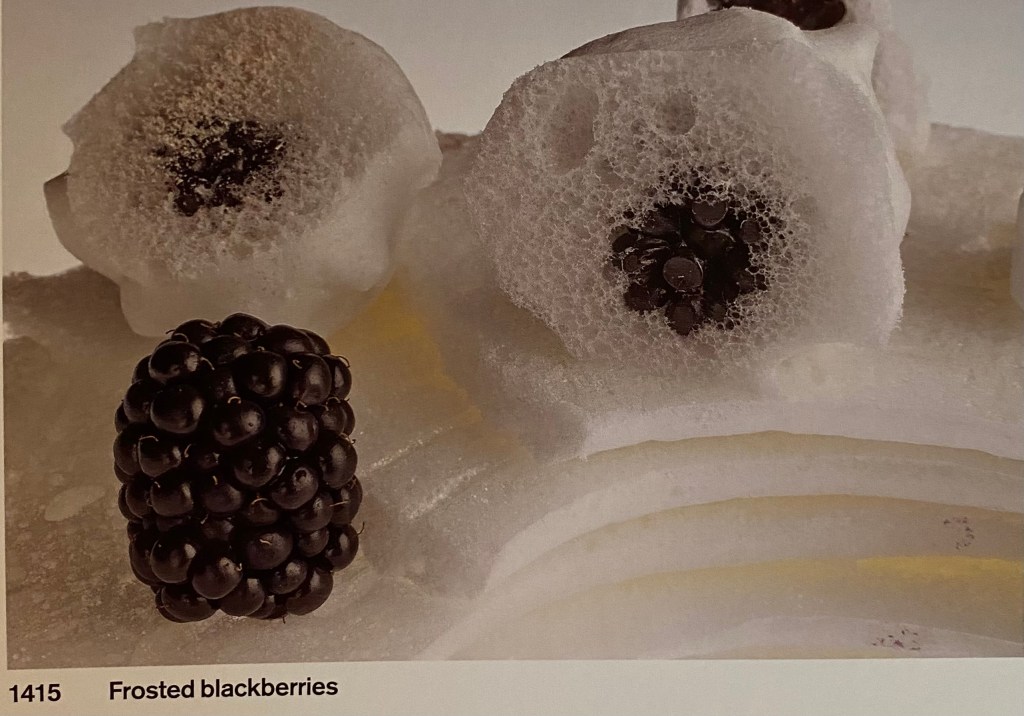
This dish is one I had been excited to try for a while. I first noticed it when I was flipping through the books after they had been delivered to my apartment. What originally caught my eye was how curious they looked. Reading the recipe only made me more intrigued to try them. The recipe requires you to make a fortified egg white of sorts to whip into a meringue, squirt some cold blackberry liqueur into the blackberries, and grate a menthol lozenge onto one of them.
These struck me as being so clever by using menthol to emulate the sensation of eating something ice cold. It was this that caused most of my excitement. I was so curious what the sensation of eating these would be like. elBulli focused on appealing to more than just taste and smell with their dishes, and this was the first example that I was able to clearly understand what the intended effect was.
While being only 6 ingredients, most of which are for adding structural properties to the meringue, they proved to be rather difficult to reproduce. The techniques involved are not particularly complex or uncommon, but the application of the techniques must be exact. I ended up making two different attempts at this recipe.
The recipe makes 10 servings of two blackberries per serving. The recommended serving temperature was room temperature for the blackberries and cold for the blackberry liqueur.
for the blackberry liqueur
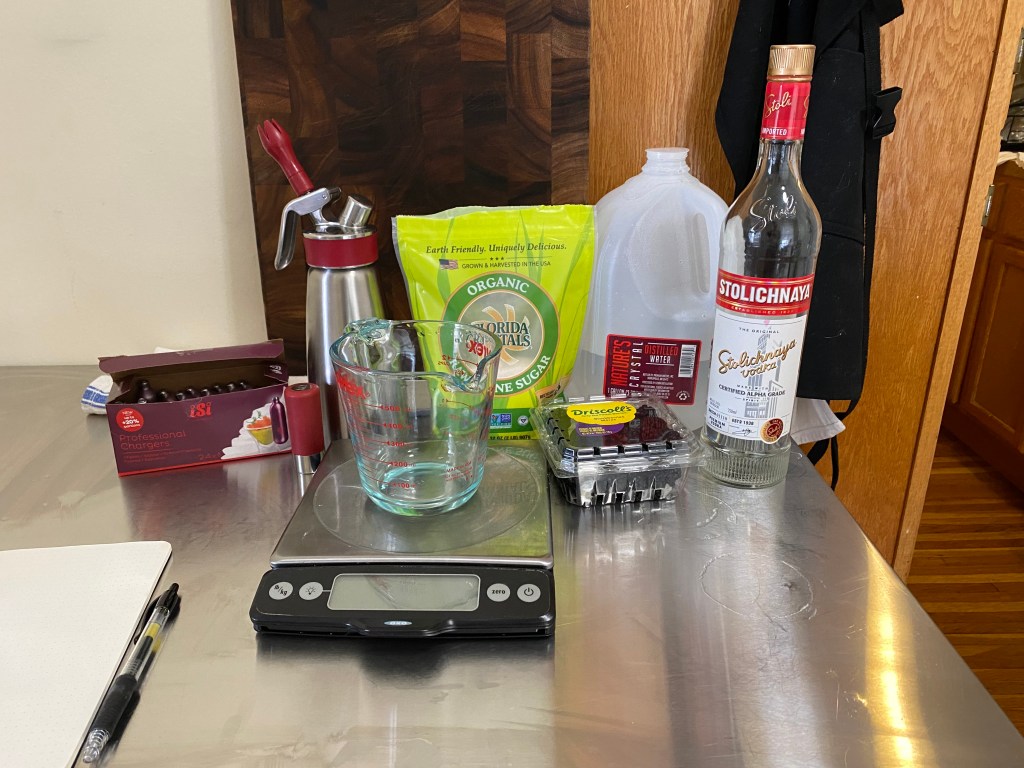
I started trying to find a good blackberry liqueur recommendation online. However, most were either quite expensive or had reviews describing it as overly sweet. So, I opted to make my own.
The ratios I used were 180g of blackberries, 115g of distilled water, 115g of raw cane sugar, and 230g of Stolichnaya vodka. I added all of the ingredients to the whipping siphon and charged it with two N2O chargers and set the siphon in the fridge for an hour. This is the typical process for doing a rapid infusion. The resulting liqueur was not as strong as I had hoped, so I split the blackberries between two mason jars and poured the liquid equally between the two and placed them in the fridge. After five days they liqueur had a much more robust blackberry flavor. I am planning on leaving it in the fridge for at least a month.
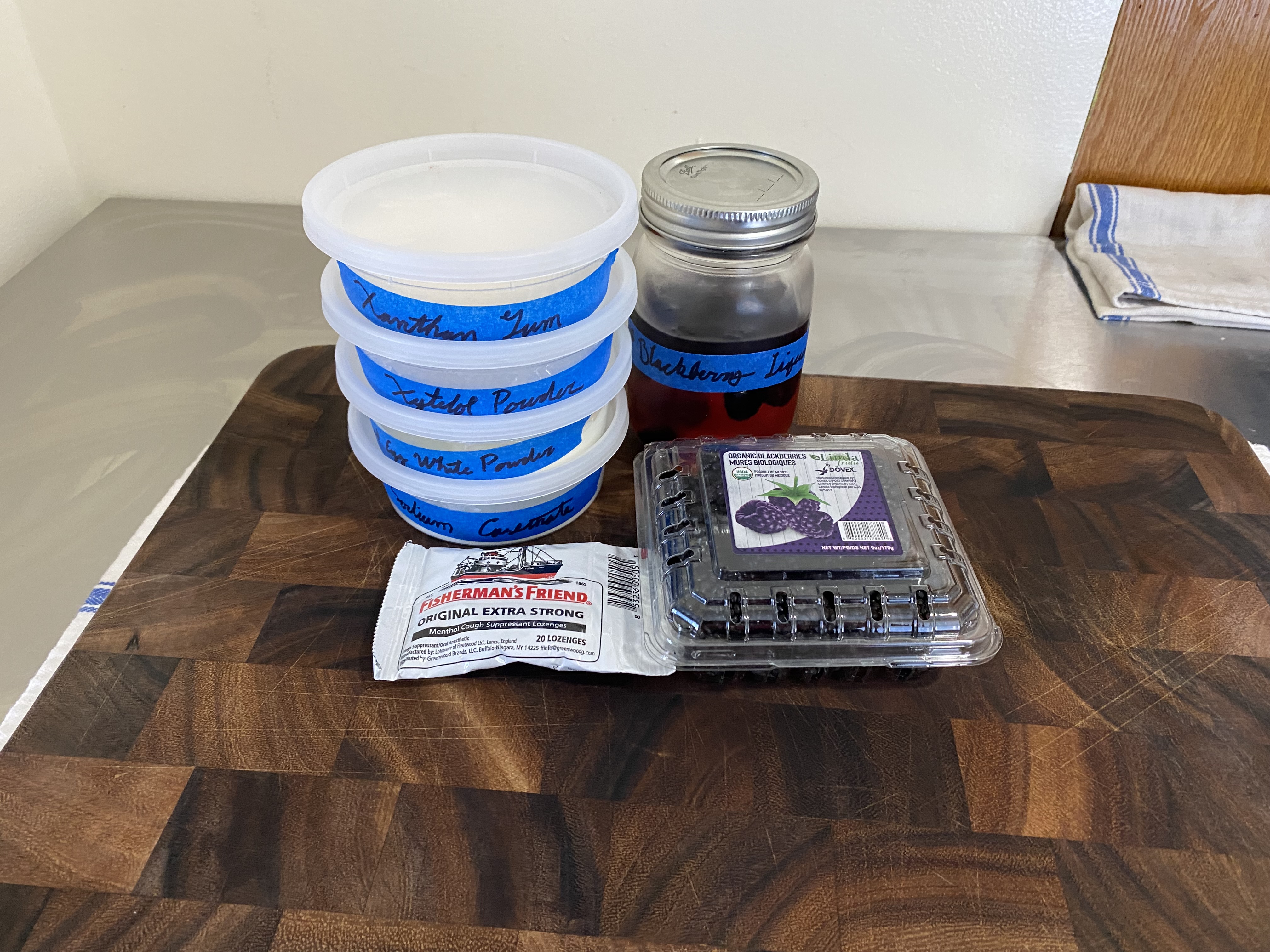
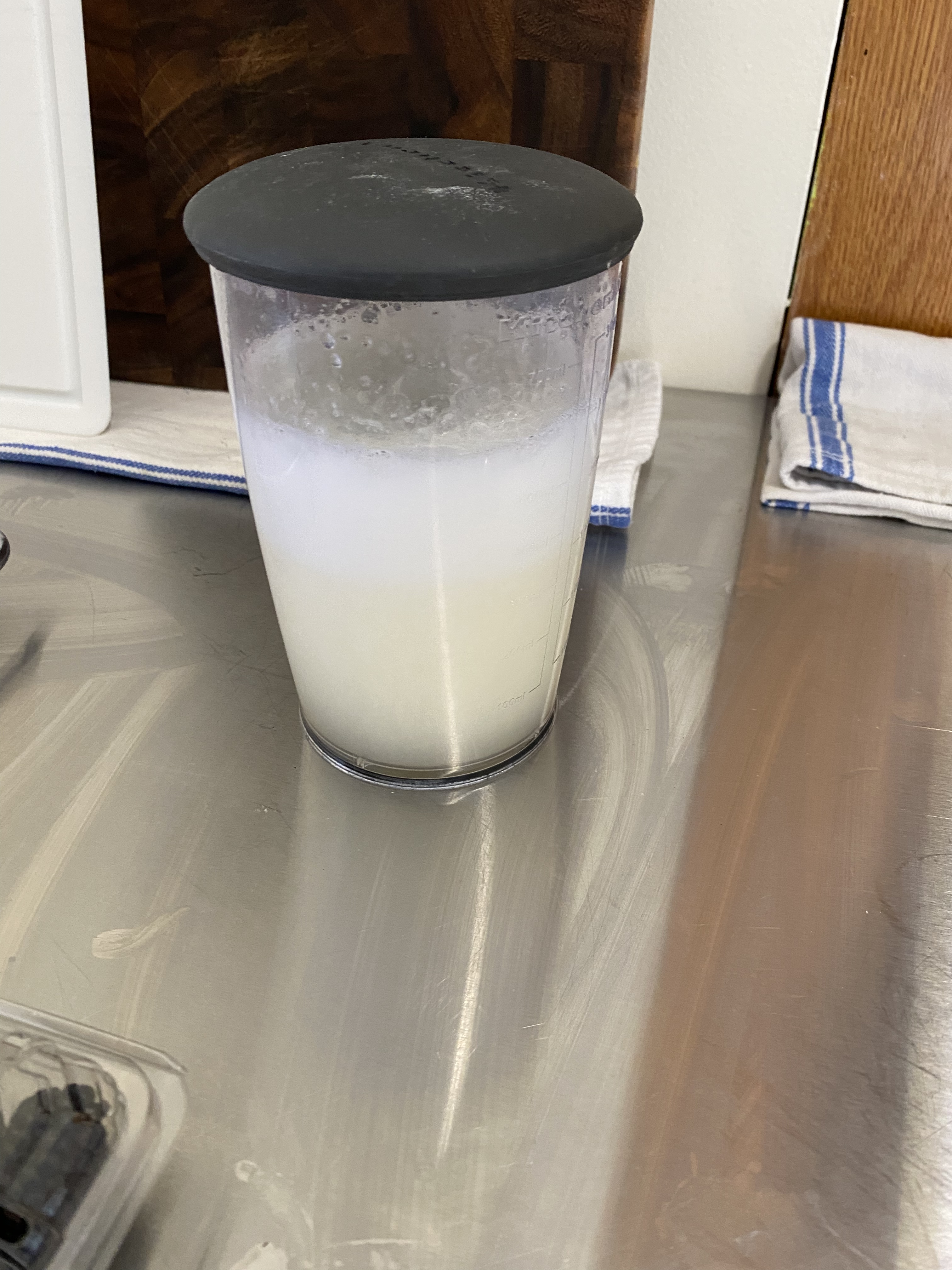
Once five days had passed since I set the liqueur to infuse, I started on the frosted blackberries. The first step of the process was making my own ‘egg white’ for the meringue. Rather than using egg whites, I mixed 5.6g sodium caseinate, 13g powdered egg white, 60g xylitol, into 400g of water.
Then, I added 1.2g of xanthan gum and used an immersion blender to disperse it entirely. The mixture was set in the fridge for three hours.
I put a Silpat on the dehydration rack of my oven and arranged 10 blackberries on it. I wanted to experiment with these a bit, so I only used half of the egg white mixture for the first batch of blackberries. The first time I attempted whipping the egg white mixture into a meringue, I did not have an electric mixer and so used a whisk and beat it by hand to stiff peaks. I then placed a 2.5″ ring mould around a blackberry and carefully dolloped on some of the meringue mix and repeated this for each blackberry to produce 10 similar marshmallow-esque frosted blackberries. The rack went into the dehydrator at 50o C for six hours.
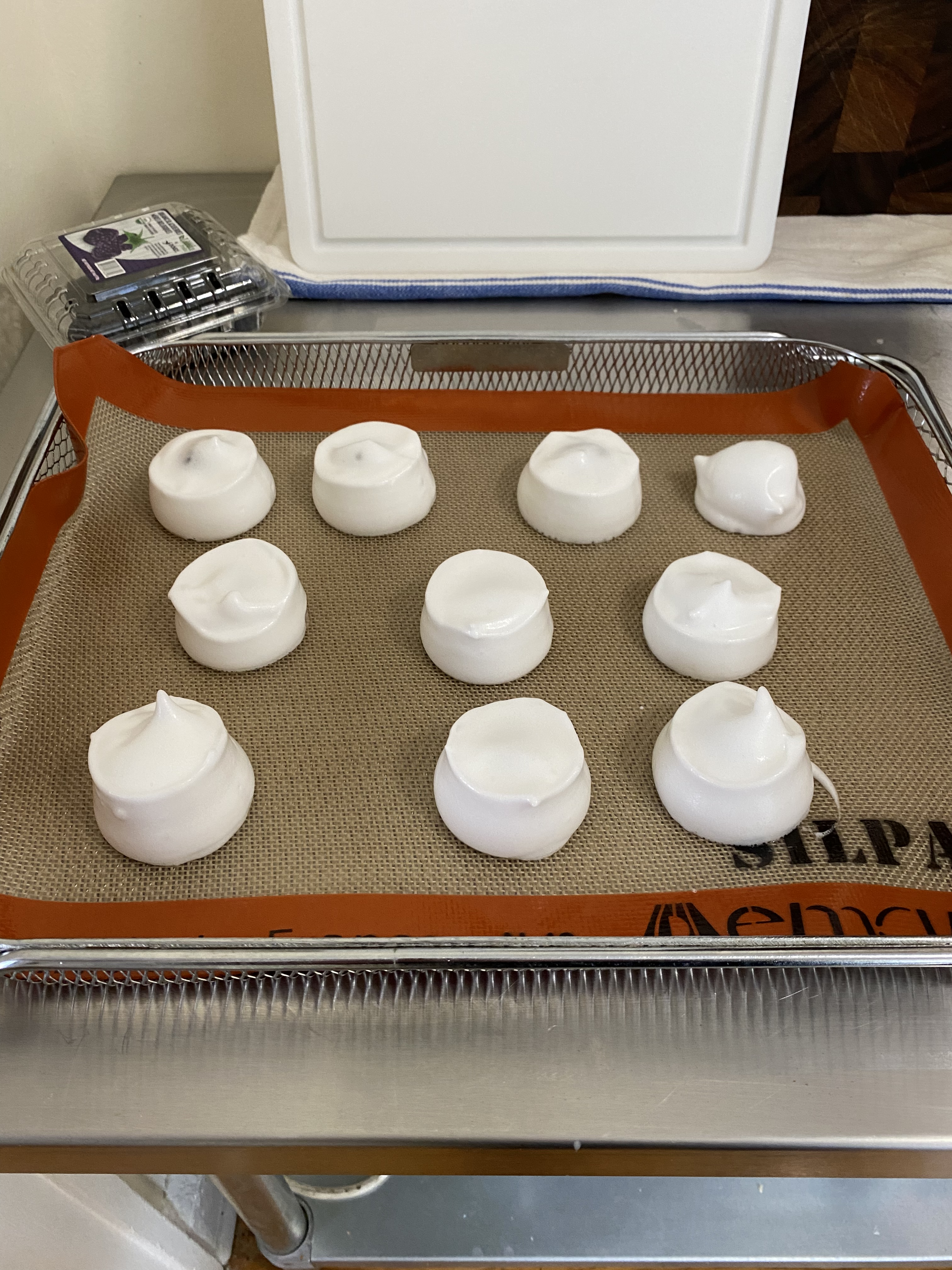
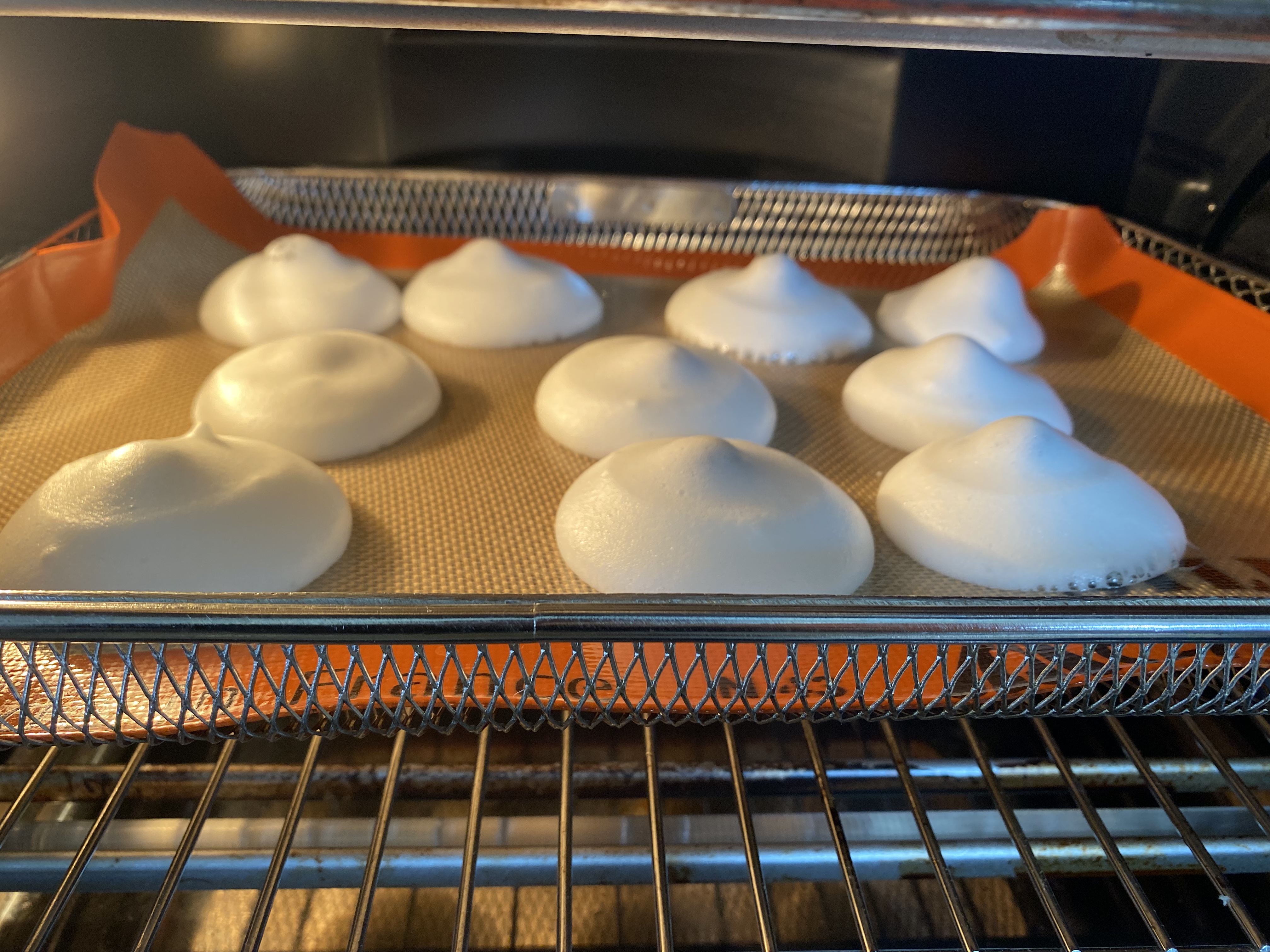
I checked on them after 30 minutes and saw they had deflated quite a bit from their original shape. I expected this to happen somewhat since there was a good chance I didn’t whip the egg whites enough, but not to this degree. However, I let them finish their six hours in the dehydrator.
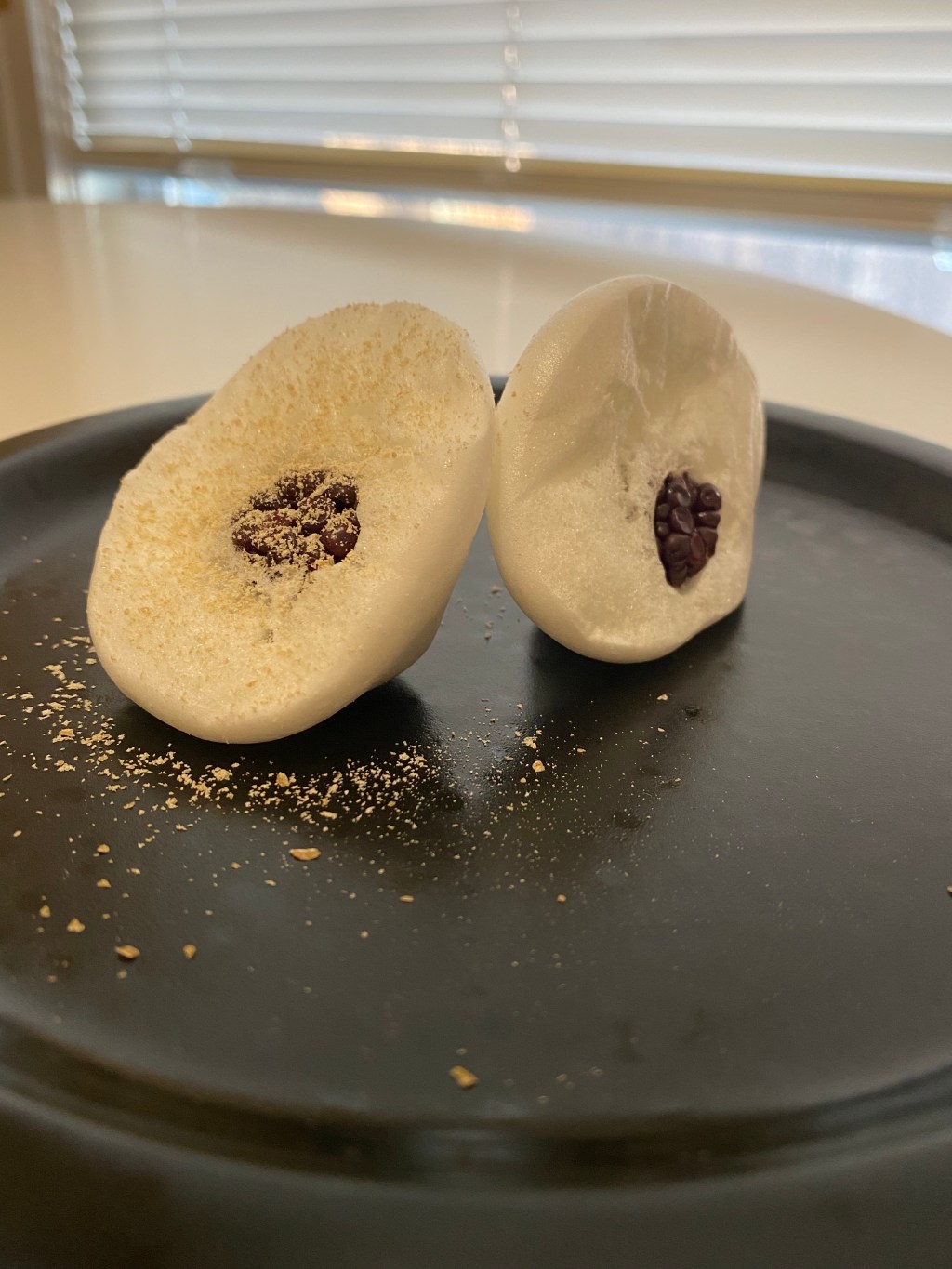
When they finished their six hours, I took them out and tried to carefully peel one off the mat to taste it. In the book, it said to take care not to break them when removing them, so I expected them to be fragile and have the usual texture that meringue has when cooked. However, these were somewhat soft and easily deformed with even a light touch. My partner thought that perhaps something was lost in the translation and “break” could have been meant to include deforming them by squishing them.
We tasted them as they were and they were lovely. The blackberries had a fantastic concentrated flavor and sweetness that I wasn’t expecting. The meringue was slightly sweet and had an almost ethereal texture that was a fun compliment to the blackberry. To properly serve them per the book’s recommendation, I, with extreme care, placed two on each plate and grated about a quarter of a Fisherman’s Friend original flavored lozenge over one blackberry on each plate. I then filled two pipettes with cold blackberry liqueur and set one on each plate.
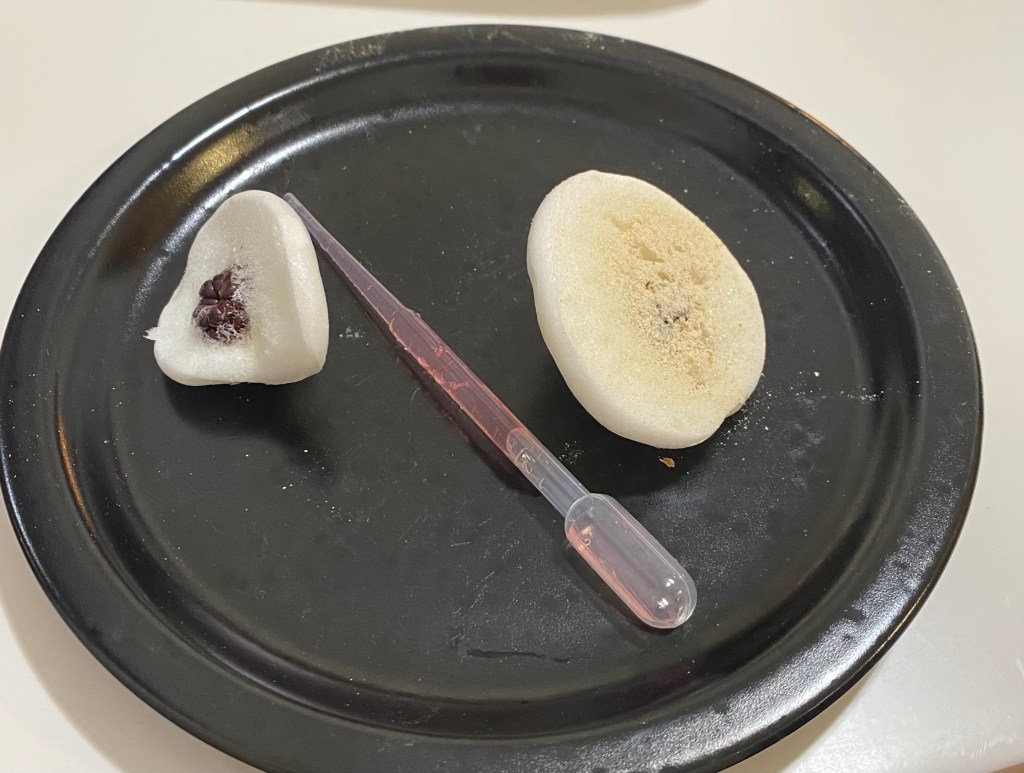
plated up
We squeezed about half the liqueur into the blackberry without the lozenge and ate them in one bite. The cold liqueur brought out the intensity of the blackberry even more and despite it being winter, the flavor was almost like eating a blackberry in the summer when it is at its best. We then squeezed the remainder into the other blackberry and ate them. The menthol in the lozenge had the effect of creating the sensation of putting an ice cube in your mouth. The strong blackberry flavor masked most of the actual taste of the menthol and overall it was such a unique bite.

My partner brought me her spare electric hand mixer and I used that to whip up the remaining mixture into a meringue to a stiffer peak. I used the same process for preparing the blackberries and let them sit in the dehydrator for nine hours instead. They still spread out a good bit and still had the soft texture.
I made a second batch of the mix, but increased the amount of sodium caseinate and egg white powder by 10%. My hope was that because these are the chemicals contributing the proteins for structure(the egg white powder) and fortified that structure (the sodium caseinate), the meringues would not deflate in the dehydrator.
I whipped half the mixture to very, very stiff peaks and used two spoons to carefully place a dollop of the meringue on the blackberry and pushed the meringue around it to fully enclose it. I dehydrated these for nine hours. They didn’t spread out as much and did firm up a bit. However, my partner noted that they had a little more chew that was slightly less pleasant than the texture using the original recipe.
This is a recipe I don’t feel like I entirely succeeded in executing. While the intended flavor and experience were, I think, fairly well reproduced, the lack of form and texture likely intended by the recipe were absent. I will be attempting this again and will experiment with the settings while dehydrating them as well as adjusting the amount of the stabilizing ingredients.
This is a dish I would certainly serve as an hors d’oeuvre if I were entertaining folks for a dinner party. They’re a fun and unique experience in addition to being tasty little snacks. I am truly excited to make this recipe again.
 Their Cooking
Leave a comment